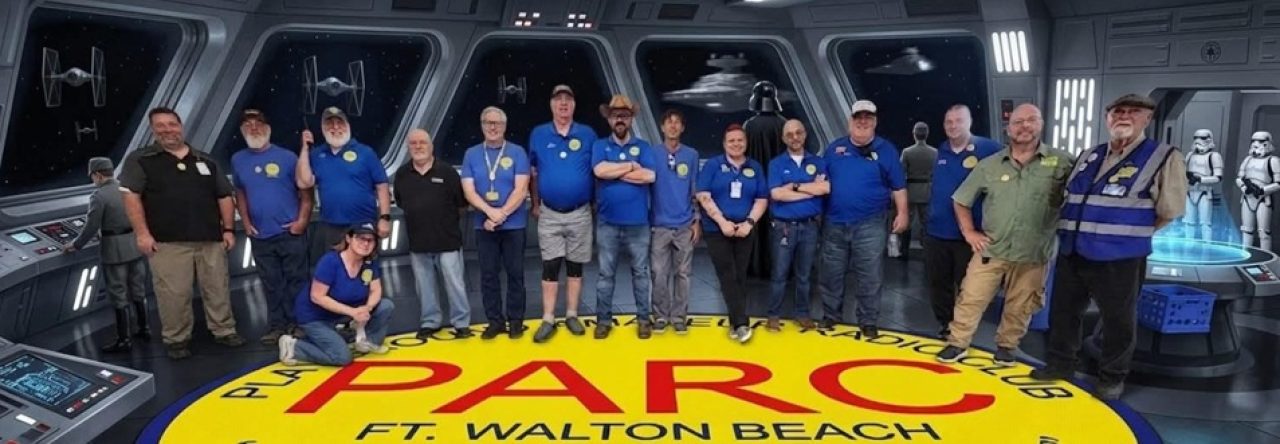
The Best Amateur Radio Club in Florida

Category: Technical

The New Age of Ham Radio

The ham radio community is experiencing a resurgence, driven by innovative technologies, changing demographics, and a renewed interest in amateur radio. Here are key aspects of this new era:

  • Youth Engagement: Ham radio is attracting a younger generation, with many newcomers entering the hobby in their teens and twenties. This influx of fresh perspectives and skills is revitalizing the community.
  • Digital Modes and Software Defined Radios (SDRs): The adoption of digital modes, such as FT8 and WSJT-X, has made it easier for hams to communicate and experiment with new technologies. SDRs, in particular, have democratized access to advanced radio capabilities, allowing operators to customize and upgrade their equipment.
  • Global Connectivity: The internet and social media have enabled hams to connect with each other worldwide, fostering a sense of community and collaboration. Online forums, social media groups, and digital modes have bridged geographical distances, making it easier for operators to find and communicate with each other.
  • Experimentation and Innovation: The ham radio community is known for its DIY ethos and experimental spirit. Today, hams are pushing the boundaries of radio technology, developing new modes, and creating innovative projects, such as satellite communications and IoT applications.
  • Interoperability and Standards: Efforts to standardize digital modes and protocols are ensuring greater interoperability between different radio systems and software platforms. This facilitates communication and collaboration among hams, regardless of their equipment or location.
  • Focus on Skills and Knowledge: Amidst the technological advancements, there is a renewed emphasis on traditional ham radio skills, such as operating techniques, antenna design, and electronics knowledge. This focus on fundamentals is helping to ensure that new operators are well-equipped to participate in the hobby.

Key Takeaways

  • Ham radio is experiencing a renaissance, driven by technological innovation, demographic shifts, and a renewed interest in the hobby.
  • Youth engagement and digital modes are revitalizing the community, while SDRs and online platforms are democratizing access to advanced radio capabilities.
  • Experimentation, innovation, and a focus on skills and knowledge are defining characteristics of this new era in ham radio.

Can Gravitational Waves Impact RF? 

From the desk of KI4ZER

A gravitational wave affecting the radio spectrum you say? What? Is that possible? Put your seat belts on and anchor down as we lift your understanding deeper into radio signal propagation!

Did you know about fluctuations in the earth’s gravity and the constant changes in its magnetic field? More than likely, that answer is a resounding yes. But have you dove deeper and considered that the changes affect the gravitational waves and cause underlying issues with the transmission and reception of all modes of signals?

We begin this short brief with discussion on How Gravitational Waves Could Generate Radio Signals inspired from an article from MIT in 2009. In this article, the study and research divulges that [even though potentially weak signals] the amplitude and frequency of change in gravitational waves does and can emit transmission detectable on many communication radio types.

Have you ever been listening to a radio and the station goes quiet but there is some underlying, indiscriminate noise other than the normal buzz of static? Have you ever watched a television set that loses its signal and the same occurs underneath the white screen peppered with black and grey dots? It is like something is there but you cannot identify just exactly what.

You have just hear what has been perplexing signal enthusiast for decades [if not longer] and it may be leftovers from a period long passed. Are we indeed hearing the change of gravitational waves as a reaction to the changes in magnetic fields when impacted from the sun? The short answer, is yes.

The motion of Gravitational waves are transient displacements in a gravitational field—generated by the motion or acceleration of gravitating masses—that radiate outward from their source at the speed of light. With that, we can deduce that the suns solar conditions can affect the gravitational fields. Thus, the same can be said for the altering of those fields in the presence or absence of a an impactful K-index.

Leaving the rabbit trail behind, [trust me, you can get lost down there] it is proposed that you can listen for, hear, and identify the noise of space time events in action. The undertones generated from these events may not overtly impact your transmission and reception, but they could if you are say working a distant faint station during a contest or experiment to determine signal path and distance on the HF bands and your intended QSO cannot be heard above the noise.

So fathom the possibilities for a minute, read deeper into the plausibility, and gain better insight on what might need to be done to detect signal anomalies while constructing a station capable of getting through the noise!

Check out pulsar timing arrays. Your imagination, inventiveness, and creativity will not be disappointed.

Photo below from Historic RF Milestones

Page 7 of 7

Powered by WordPress & Theme by Anders Norén