The Best Amateur Radio Club in Florida

Category: Announcement Page 5 of 13

APRS Tech Night was ON the Beacon!

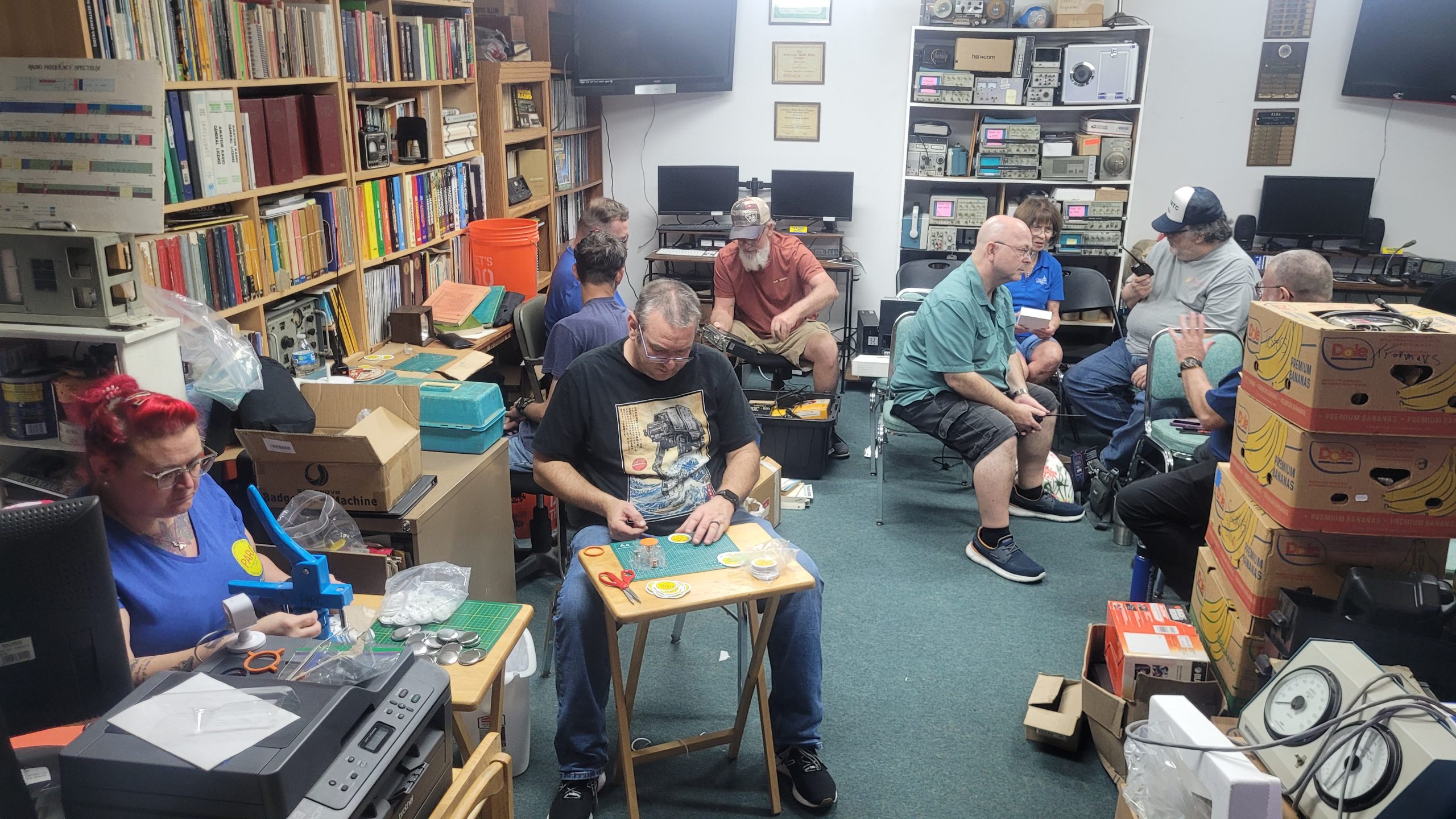
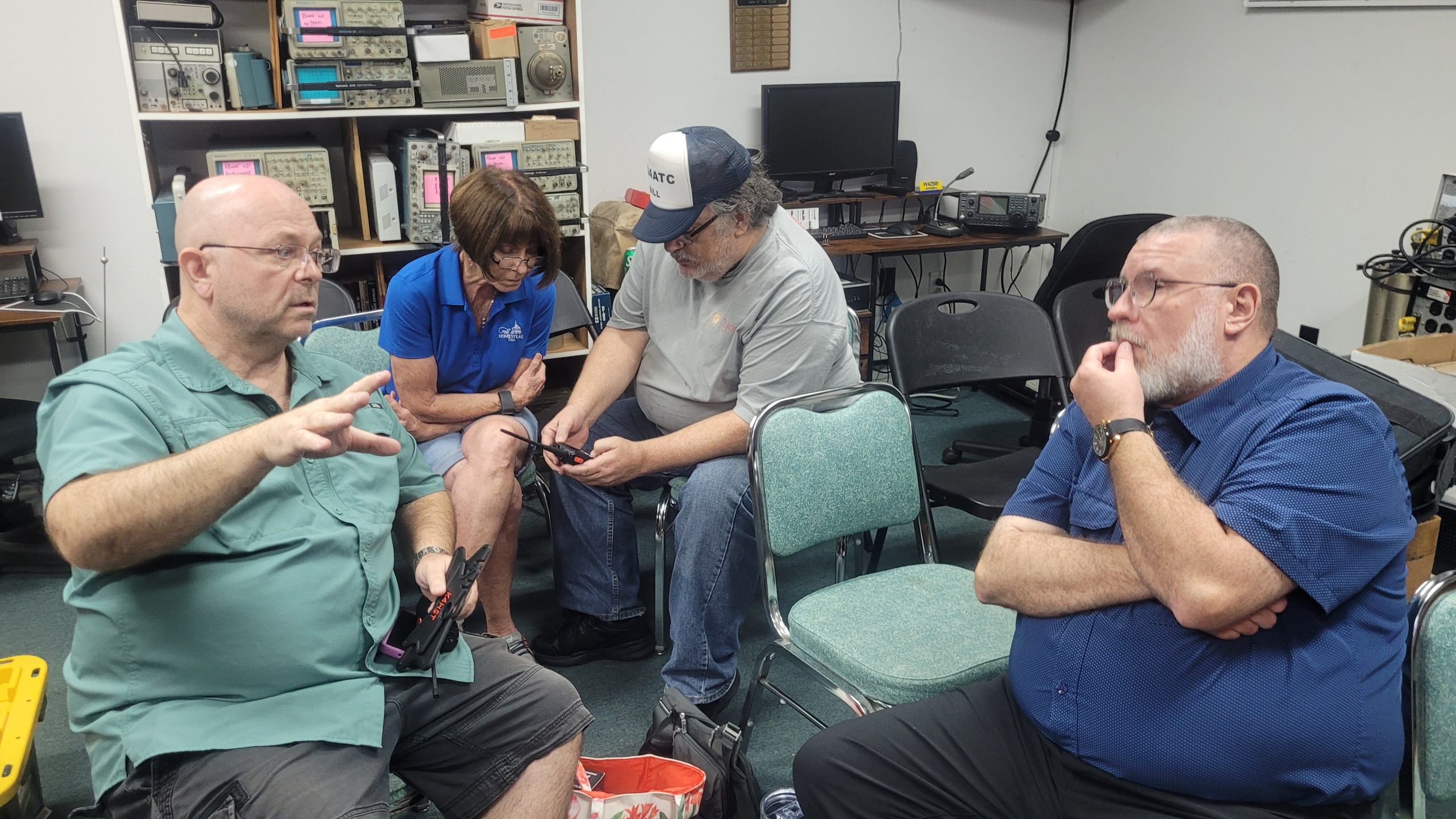
PARC Tech Night! was awesome! APRS was taught by KQ4NWD Rob, and he smashed it! Ok, not literally, but what a great presentation and way to encourage more operators and communication enthusiasts to explore more operating capabilities in the area!

APRS or Bust!

APRS, or the Automatic Packet Reporting System, is an amateur radio system that transmits real-time digital information over a local area. It was invented by Bob Bruninga (call sign WB4APR) in the 1980s and has since evolved into a globally connected network. 

Come to PARC on Thursday, 2 Oct, 2025 at 730pm! 17 First St SE Fort Walton Beach Florida!

Team Building in Amateur Radio

Team building in the context of amateur radio can be approached in two primary ways: through activities that foster collaboration within a club or group, and through events that leverage the nature of the hobby itself to build a sense of community and shared purpose.

​Activities within a Club or Group:

These activities are designed to get members working together, sharing knowledge, and building camaraderie.

​Public Service Events: Providing communications for local events like marathons, parades, or community festivals is a classic team-building exercise. It requires coordinated effort, clear communication, and reliance on one another to achieve a common goal. This is a practical application of radio skills that benefits the community and strengthens the team.

​Emergency Communications Drills (ARES/RACES): Simulating emergency scenarios, such as a large-scale power outage or natural disaster, requires a high degree of teamwork. Participants must manage message traffic, relay information accurately, and coordinate with different agencies. These drills build trust, a sense of shared responsibility, and demonstrate the critical importance of the group’s skills.

​Antenna Parties: This is a hands-on activity where members come together to help one person install or repair an antenna. It’s a great way for experienced “Elmers” (mentors) to share their knowledge with newer members, and it creates a direct, tangible sense of accomplishment for the group.

​”Homebrew” Nights or Build Projects: A club can organize a project where everyone builds the same simple piece of equipment, such as a QRP (low-power) transmitter, an antenna tuner, or a simple radio. This promotes skill-sharing and results in a shared achievement that members can be proud of.

​”Fox Hunts” (Direction Finding): This is a competitive and fun activity where teams use radio direction-finding equipment to locate a hidden transmitter (“the fox”). It’s an excellent way to practice technical skills in a fun, non-stressful environment, and it requires a team to collaborate on strategy and navigation.

​Technical Workshops and Presentations: Members can take turns presenting on their areas of expertise, such as digital modes, satellite communications, or a specific radio they’ve built. This fosters a culture of mutual learning and respect for each other’s unique skills.

​Leveraging the Hobby for Community

​The nature of amateur radio itself offers opportunities for team-building on a broader scale.

​Contests and Special Events: Participating in on-air contests or operating a special event station (for a holiday, historical anniversary, etc.) unites a group with a common objective. Working together to make a large number of contacts or communicate with a specific group of people builds a sense of shared purpose and friendly competition.

​”Parks on the Air” (POTA) or “Summits on the Air” (SOTA): These activities involve operating from a designated park or summit. A group can plan a joint activation, splitting roles for setup, operating, and logging. This gets members out of their individual shacks and into a shared, outdoor environment.

​Mentorship Programs: Pairing new hams with experienced “Elmers” is a fundamental aspect of the hobby that is inherently about team-building. This one-on-one guidance helps newcomers navigate the initial stages of the hobby and makes them feel like a valued part of the community.

​Regular Club Nets: A weekly or daily on-air net allows members to check in and have casual conversations. This informal communication helps members stay in touch and builds a sense of community even when they can’t meet in person.

​By combining these types of activities, amateur radio groups can not only maintain a strong membership but also create a vibrant and supportive community where members feel connected and valued.

PARC did What?!

Every single Pile-Up is full of Action!

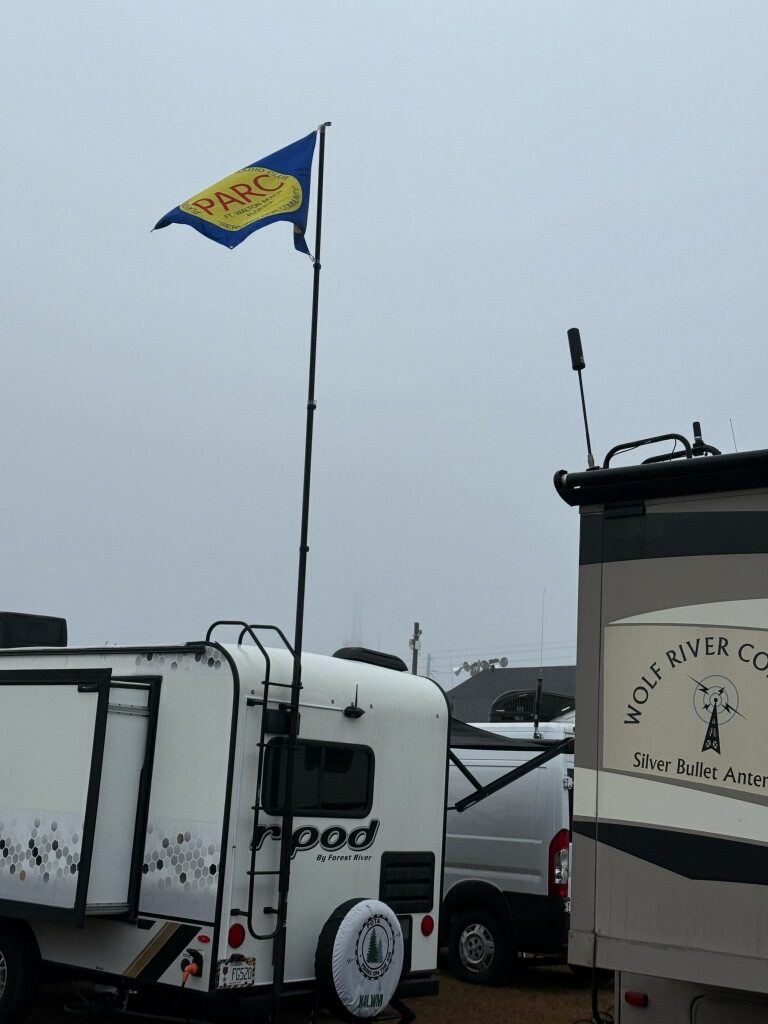
What do we mean by that?! PARC, as you know has WIRES-X capabilities! Today, the team improved the antenna from a 3 Db gain antenna, to a 9 Db gain antenna! It also was elevated form its standoff location to a new height! So what does that mean for you and everyone else? A better coverage area and reliable WIRES-X coverage in NW Florida!

Give it a shot, break out your WRES-X Capable Radios, and talk digitally, the world over!

146.400 MHz sponsored by AA0EU, Node 91172 Room 01172.

PARC always has something in store to suit your experimentation in Amateur Radio and many other forms of communication! Key on in every 1st and 3rd Thursday at 730pm and every Sunday at 3pm for the PILE-UP or join the net each Sunday at 730pm on 146.790!


Did you know?!

Did you know?! The Playground Amateur Radio Team supports more than just Amateur Radio! It’s true! For many years, The membership of the Playground Amateur Radio Club has been sharing repeater cabinet space with WJZK Smooth Jazz 97.3 “The Bay”. This is a 100 watt Station in Fort Walton Beach Florida. If you are a fan of Jazz or not, you should tune it in when in town or out on the go! Maybe you are a fan of Jazz and just do not know it. A lot of TV shows, Movies, and other forms of entertainment use Jazz as a diegetic (source music) portrayed in the narrative of a story to capture your attention and elicit a perceived mood, action, or set of circumstances to establish a relatable experience [see, we learn things together].

WJZK hold classes and teaches Radio to youth and adults! Further, WJZK also supports non-profits by bolstering their mission and sharing the word of their events in the community! Sounds very familiar does it not?! Many people have a love of radio [regardless of transmission type] and the positive impact it has for everyone! Tune your dial, visit their website, drop them a line! You never know what good can come from the avenues you pursue! Follow the Jazz below to their website!

Jazz 

220 MHZ, an Active, Underused Frequency!

Experimentation is a great thing in Amateur Radio! For instance; Operators utilize the 220 MHz band for weak signal experiments using SSB, CW, FT8, MSK144, and other WSJT-X modes, including meteor scatter contacts and grid chasing for VUCC awards!

The 220 MHz band is not dead, though it’s less popular and more sparsely used compared to the 2-meter and 70-centimeter amateur radio bands.

Current Use and Perception

  • The 220 MHz (1.25-meter) band is allocated and reserved for amateur radio use, particularly in North America.

  • While it has historically seen less commercial radio equipment and lower activity, many local ham clubs and operators do actively use the band, especially for FM repeaters and simplex operations.

  • There are still over 1,600 repeaters in the U.S. operating on 222 MHz, indicating a dedicated user base and regular activity in some regions.

Band Characteristics

  • The 220 MHz band features propagation characteristics that blend the advantages of both the 2-meter and 70-centimeter bands, allowing good range and relatively low noise environments.

  • Securing coordinated repeater frequencies on 220 MHz is often easier, with less crowding and competition, which makes it attractive for clubs and groups seeking reliable local communications.

Equipment and Activity

  • The limited availability of off-the-shelf commercial equipment has historically limited growth, but specialized and enthusiast-driven hardware continues to emerge, such as repeater systems and dedicated mobile or handheld transceivers.

  • Some regions may experience “quiet” bands, but this is often an opportunity for experimentation, private communication, or for groups hoping to avoid congestion present on other VHF/UHF bands.

Community Sentiment

  • Many operators see the band as underutilized rather than actually “dead” and encourage more experimentation and activity, suggesting that with increased use, interest in the band could easily grow again.

The 220 MHz band remains an active part of the amateur radio landscape, valued for its unique properties, dedicated repeaters, and as a less crowded alternative to other VHF and UHF bands.


Congratulations to Dr. Fregger, KJ4ECP!

Dr. Fregger (KJ4ECP) of Family Eye Care recently announced his retirement! A congratulations is in order for him as he has been  benefactor of the Playground Amateur Radio Club for many years. He has served in multiple roles in the Executive and Administration of the Organization and contributed uncounted hours of community service to support Amateur Radio! Dr. Fregger was also a long time Treasurer of the Playground Amateur Radio Club and essential in keeping the organization going while being mindful enough to train and seek out a replacement after his need ot focus on his goals for his family and his future. He has always had a smile and a handshake for those that see him in person and over the air he has given kind words and wonderful advice!

Dr Fregger has traditionally been the VOICE at many of the Hamfests put on in Fort Walton Beach for many, many years and is a staple in our Amateur Radio Community!  Dr. Fregger loves the Beach! Dr. Fregger is not going away, he is starting his next chapter and we at the Playground Amateur Radio Club are proud to call him our friend! Be sure to offer him congratulations on his achievement and return that fabulous handshake and a smile which calms the mind and keys the mic!

CONGRATULATIONS DOC! 

PARC B Q Success!!!

CQ! Thanks to all that came out to the PARC B Q, Amateur Radio Open House! What a great time and wow did we share the joy of worldwide communications demonstrating public service! Stay tuned as we embark into the next event! Until then, 73’s and stay safe!


FOX HUNT! // PARC B Q!! // OPEN HOUSE!!!

The time is nigh! The details are in!! Are YOU ready to Hunt the hidden FOX Transmitter?!!

The Rules: 

You can start at the Clubhouse at 1000 on Sunday Aug 31st 2025! 17 First St SE Fort Walton Beach Florida

You can also start from any location you desire!

You must obey traffic laws. Have fun but please be safe.

You can use any radio and antenna set up you want!

You DO NOT need to be an Amateur Radio Operator to hunt the FOX!

The FOX will be hidden in a public location in the city of Fort Walton Beach Florida only.

The Details: 

The FOX will be on 146.565 Megahertz simplex. That means no offset, no shift, no tone. 

The FOX will transmit from 1000 to 1200 only. 

Teams are encouraged for triangulation but not mandatory.

Following the fox hunt, the Playground Amateur Radio Club will host a BBQ with an Open House! This starts at 1200 pm and goes until 500  pm. Food and Drink will be available for $5.00 /plate. Cash is King. Donations are also greatly appreciated!

All times are in Central Time.


Free online Technician License radio class!

Free online Technician License radio class.

Sat/Sun of Labor Day weekend.

(August 30-31, 2025)

REGISTER VIA EMAIL ONLY (ars.n7ji@gmail.com).

Thanks!


Page 5 of 13

Powered by WordPress & Theme by Anders Norén