The Best Amateur Radio Club in Florida

Category: Technical Page 3 of 7

“What are you working on?” From the Desk of K4LWM

A very common question at any of the Playground Amateur Radio Club meetings, pile-ups or importune events is “What are you working on?”

It seems to come from any member, because everyone is looking for something interesting, potentially for their next project. I have even asked that question, of other members, when I hear snippets of conversation that pique my interest.

In the past year I have been asked the question several times and have not really had a good project to talk about. Not because I have not been busy or not looking for things that I wanted to work on, but mainly because I have been listening and taking notes and investigating, that is if you consider watching YouTube videos investigating. Yes, I have been looking for what I want my HAM radio experience to be.

Let me digress, I have had my license for over 25 years, but I came from a club in Birmingham that was very active in the weather warning scene. The club (BARC) had networked repeaters that covered the entire five county area that made up the Birmingham metro area. Lots of members that were active on the VHF bands at all hours of the day and night. I was content to be just one of the members and because of a job that kept me mobile most of the time, I was one of the Ratchet Jaw operators you found on the bands during the normal work day.

In 2013 I purchased a home in FWB to serve as a vacation home with the intent to retire there or at least in the area in the future. While I was working on the house trying to get it ready for that retirement day, I monitored the bands but was very disappointed because of the lack of traffic. I did make a few contacts and enjoyed having breakfast with a few of the operators that I met on the local repeater. Those were few and far between because I was still traveling back and forth to Birmingham for work. Of course, the restaurant, Mother Earth, closed and I lost contact with the few HAMs that I knew from this area.

When I retired in 2017 and moved to FWB full time I had lost interest in Amateur Radio and to downsize I sold my tower and all most all of my gear. I thought this area was void of radio activity.  Unfortunately, I had just not met the right people.

All of that changed when I connected with Bill, KQ4ATC, which lead to an invite to PARC’s field day, where I meet several operators and had a very good time. That activity earned an invite to Tech Night at the PARC club house and then to membership and then to that question, What are you working on? I did not really have a project to talk about.

That led me to ask myself, What do I want my HAM experience to be?

I became an active participant in the club, attended tech night, the business meetings and the swampfest, along with other club activities. I found that my interest in Amateur Radio was renewed and I started looking for what I wanted to do to enjoy this hobby.

I dusted off the old Icom IC 7000, built a LiFePo4 battery box, purchased a wolf river coil vertical antenna and started making contacts on 20 meters (chasing POTA) something that I had never done in the past. That was fun but, hearing the other club members discuss the projects that they were working on still left me with a feeling that I was not really embracing the experience yet.

Other members were creating things with 3D printers, experimenting with an assortment of antenna, incorporating digital modes of operating and then trying to bring the information to the club members at tech night. Wow, what a varied assortment of activities they were involved in. I started making notes in my little black book. I made list of components that were used in the various projects, websites for sources of the components and/or YouTube videos describing similar projects.

I would take my list to the hamfests, tailgates or swap meets that I attended. I ordered torriods, enameled wire, printed project boxes and began to build transformers, balum, ununs and chokes. By collecting the various parts and pieces an idea of a project that would allow me to expand my radio experience formulated in my mind. I wanted to build an antenna that would allow operation on the low bands that would work within the confines of my lot size and the HOA restrictions.

I assembled an antenna mast out of chain link fence gate post, used push-up antenna mast and 1” Lowe’s PVC pipe that combined to form a 30-foot base for an EFHW 40-10-meter antenna. This was installed in the back yard next to my storage shed. The 20-foot flag pole in the front yard anchored the other end of the 63.5-foot 18-gauge EFHW wire.  This arrangement did fit into the 38×150 foot lot size of my property and kept the antenna wire behind the front of the house.

The tuning process required raising and lowering the wire many times pulse adding a counterpoise and trying to compensate for the metal roof on the shed which is under the feed point of the antenna. Finally, after two days of tuning, an acceptable antenna SWR was achieved for the 40-10-meter bands and the IC 7000 was hooked to the coax and powered on. When the 40-meter band was selected the radio came alive with Net traffic at 7.185 LSB.

I was able to join the net and made 35 contacts on 40-meters, which I had never operated on before. Those contacts ranged from Wisconsin to Connecticut down the east coast to Virginia and even one in ST Augustine Florida, all within 20 minutes. I was operating mobile from a patio table on my deck, on an antenna that I built. This was quite an accomplishment for my first project build, made possible by the influence from the members of Playground Amateur Radio Club that renewed my interest in the core activities embraced by the HAM radio community, Experimentation and Implantation.

So, can I ask you, “What project are you working on?”

What is POTACAT?!

Pota cat (found at potacat.com) is a specialized, 1-click hunting and logging application for Parks On The Air radio operators. It uses CAT control to instantly tune radios, allowing users to quickly find, log, and chase activators. It specifically features watchlist notifications, park filtering, and Hamlib integration for over 200 radios!

Usage Examples & Features:
  • 1-Click Hunting: Directly tune your radio to a POTA activator’s frequency by clicking a spot in the app.
  • Efficient Logging: Automatically log contacts and manage Park-to-Park (P2P) contacts.
  • Filter & Track: Hide previously worked parks and set watchlists for specific activators or rare locations.
  • Real-time Data: View live spots and POTA, SOTA, and DX information in a dedicated, often compact, interface.
  • Radio Control: Integrates with software like Hamlibrigctldflrig, or OmniRig to manage radio settings

How it works:

Launch & configure — A first-run welcome dialog walks you through radio setup: FlexRadio, Hamlib rig, or no radio. Set your Maidenhead grid square for distance calculations.
Browse live spots — Seven sources stream in automatically: POTA, SOTA, DX Cluster, RBN, PSKReporter FreeDV, WSJT-X decodes, and DX Expeditions. Filter by band, mode, source, and spot age.
Pick your target — Sort by distance, use split view or pop-out the map to a second monitor, or set up a watchlist and get desktop notifications when friends come on the air.
Click to tune — One click sends the frequency and mode to your rig. CW XIT offset is applied automatically. You’re on the air and ready to make the contact.

N2XU Shows Off with Purpose!

At the Sunday Pile-Up, Tom, N2XU Showed off the Starlink mini! This useful tool comes in handy for reliable internet when conventional methods are down! Here’s how:
The Starlink Mini is the ideal, compact solution for internet access in a pinch, featuring a built-in router, low power consumption, and portability for rapid deployment in emergencies. It offers speeds over 200 Mbps, allowing for essential communication during grid failures. It can be powered by portable power stations or 12V DC, making it highly versatile for remote areas or outages.
Key Aspects of Using Starlink in a Pinch:
  • Portability & Setup: The Mini is designed to fit in a backpack and can be set up in minutes.
  • Power Options: While it comes with a 120V adapter, it supports 12V DC input, allowing it to run off portable power stations (e.g., Anker Solix) or vehicle power for long-term outages.
  • Emergency Reliability: Starlink has proved useful for maintaining internet access during natural disasters (like tornadoes) when cellular towers fail.
  • Performance: Capable of high-speed, low-latency internet (200+ Mbps) for browsing, streaming, and Wi-Fi calling.
  • Cost-Effective Option: The Mini allows access to cheaper service plans (e.g., $50/month) for sporadic, emergency, or remote use.
Limitations & Considerations:
  • Power Consumption: Although lower than standard kits, it still requires a consistent power source.
  • Physical Obstructions: Requires a clear view of the sky to function.
  • Alternative Devices: For true, remote, or wilderness emergencies (where power isn’t available), satellite messengers or PLBs are more suitable.
For a 3-day outage scenario, a portable power station like the Anker Solix 522 can keep the Mini running for roughly 9-10 hours, according to one user experience.

DX the World, Inspiring Others!

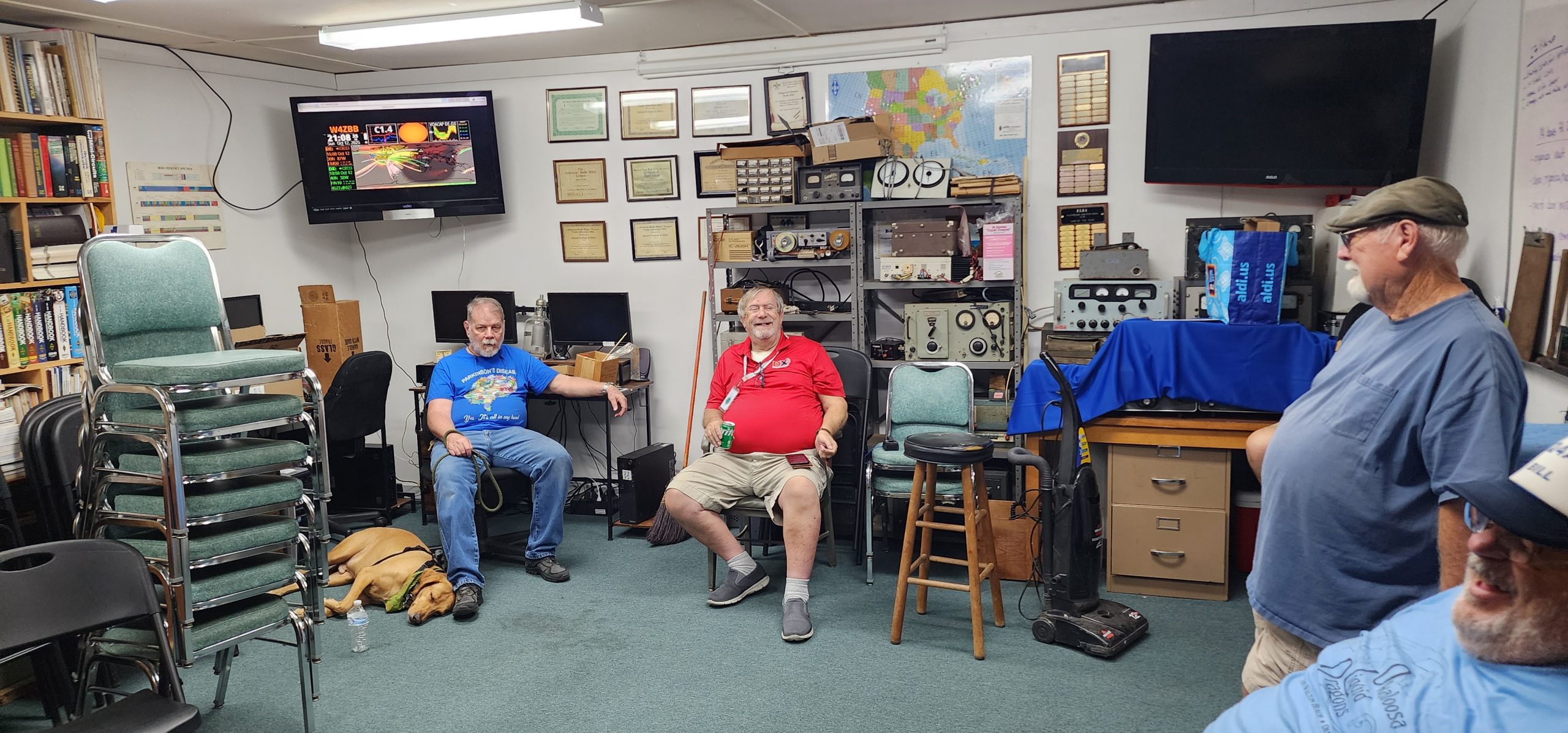
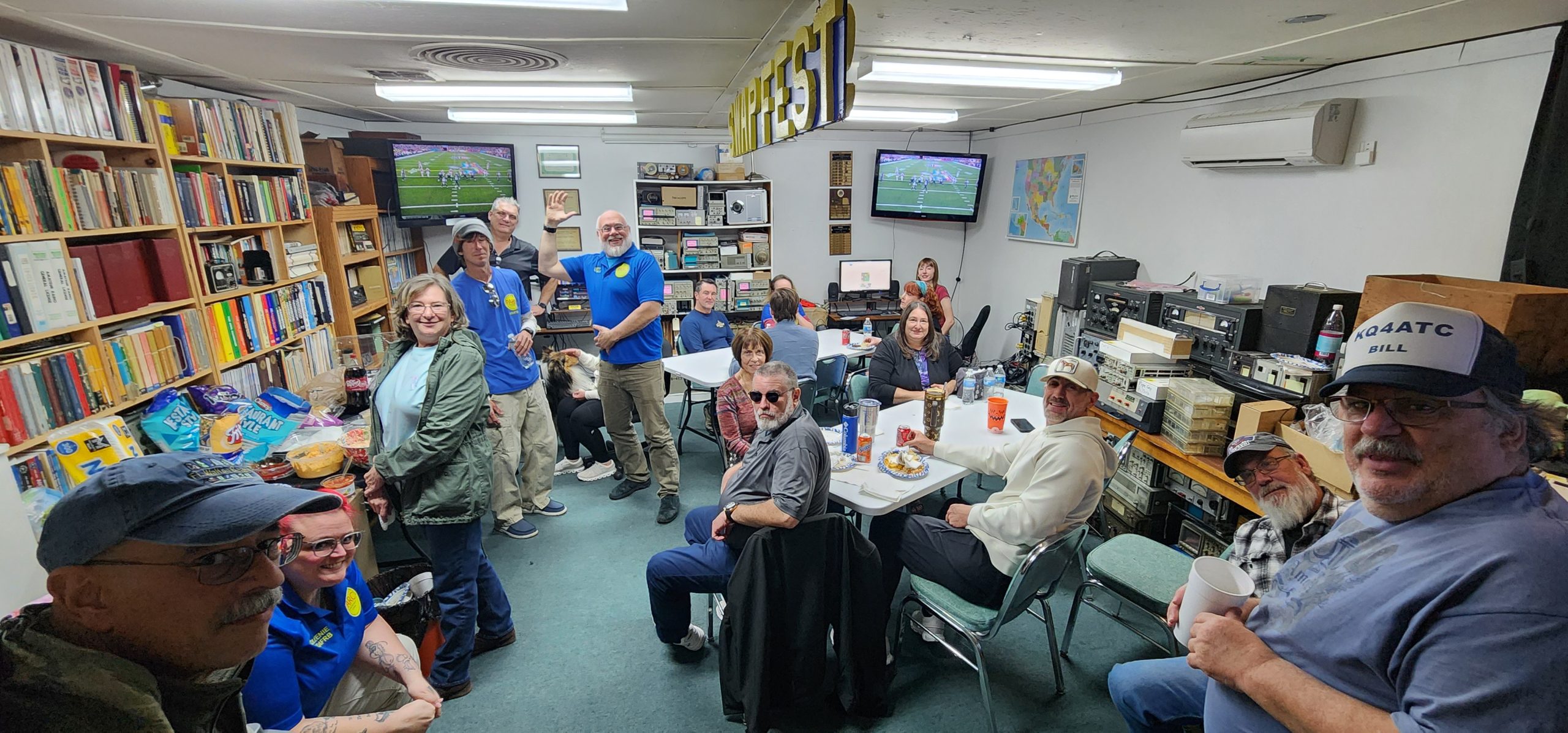
What a great gathering today at the Playground Amateur Radio Club! The Pile-Up was wonderful and had many visitors! The Super Bowl and DX Watch Party was great! The Sunday Night Nets were wonderful! In all, we had visitors from multiple areas with Hams and Non-Hams alike joining in and visiting us! Thank you to all who made this another successful event and thank you to the DX contacts all over the globe!

Coming this week the parking lot will finally be getting repaved! This is a wonderful thing that has been in need for a long time! Be sure to catch the ball and make your first down with the Playground Amateur Radio Club by following our Calendar for your next touchdown!
PARC GOES dIGiTaL!

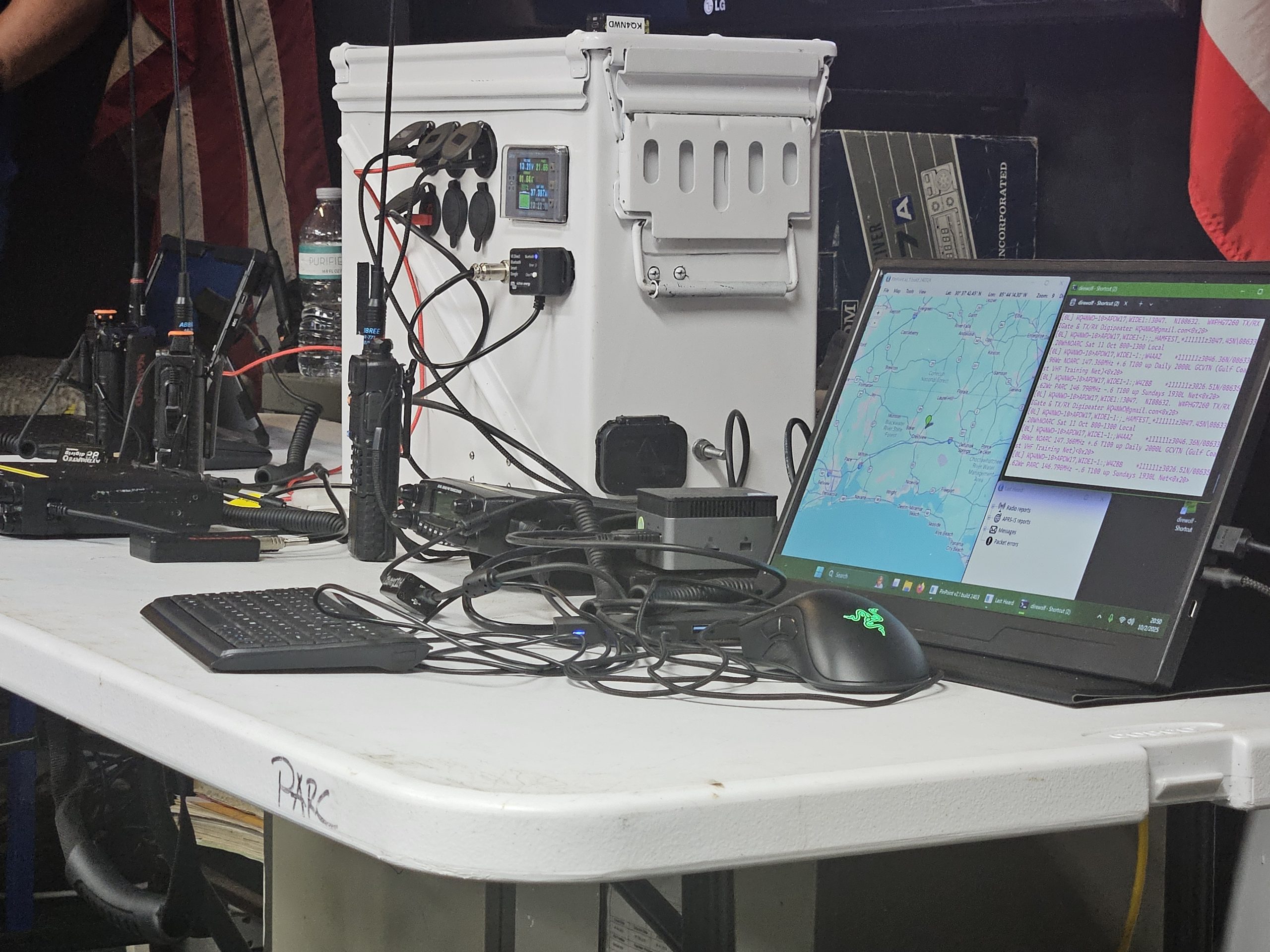
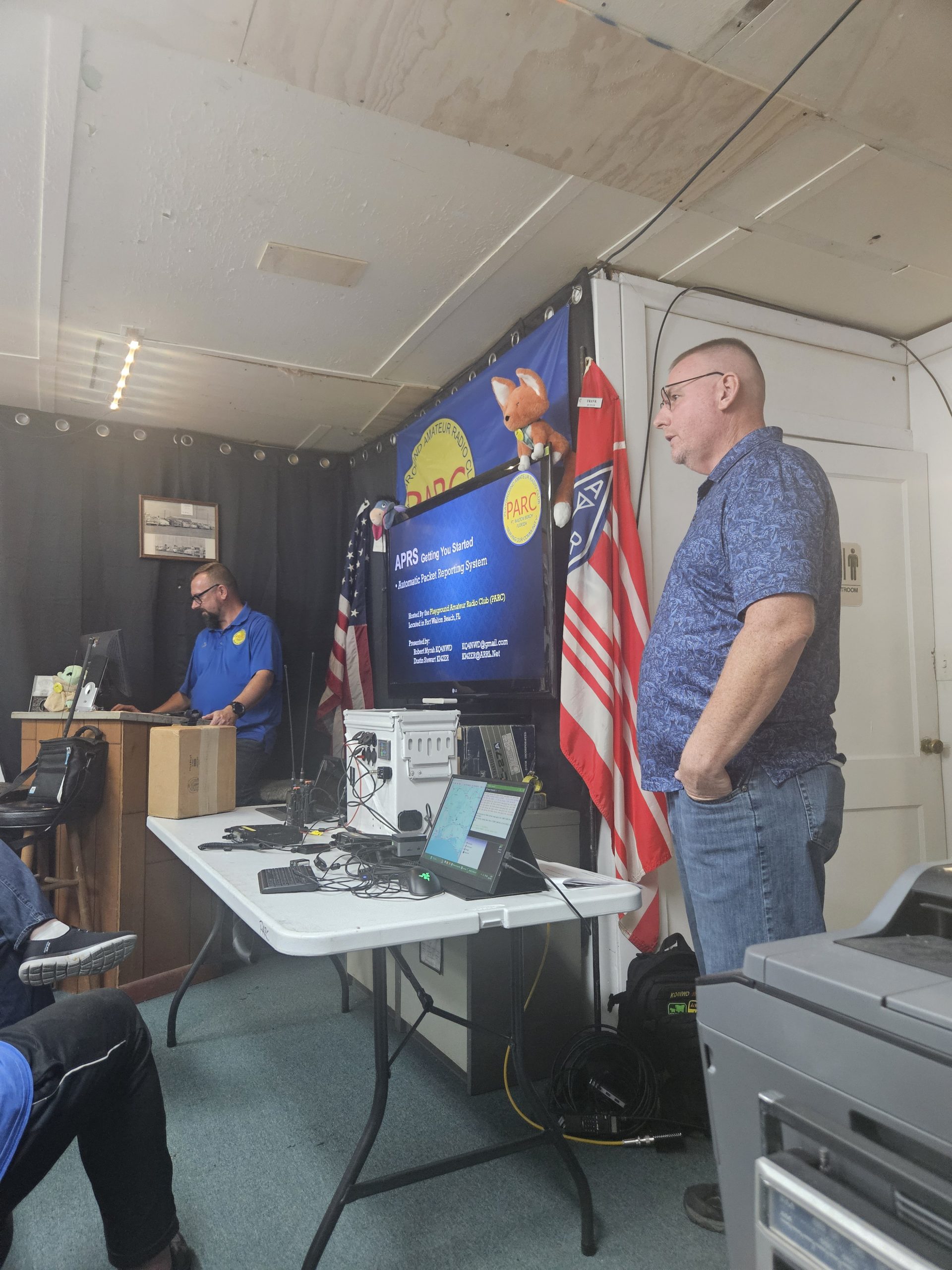
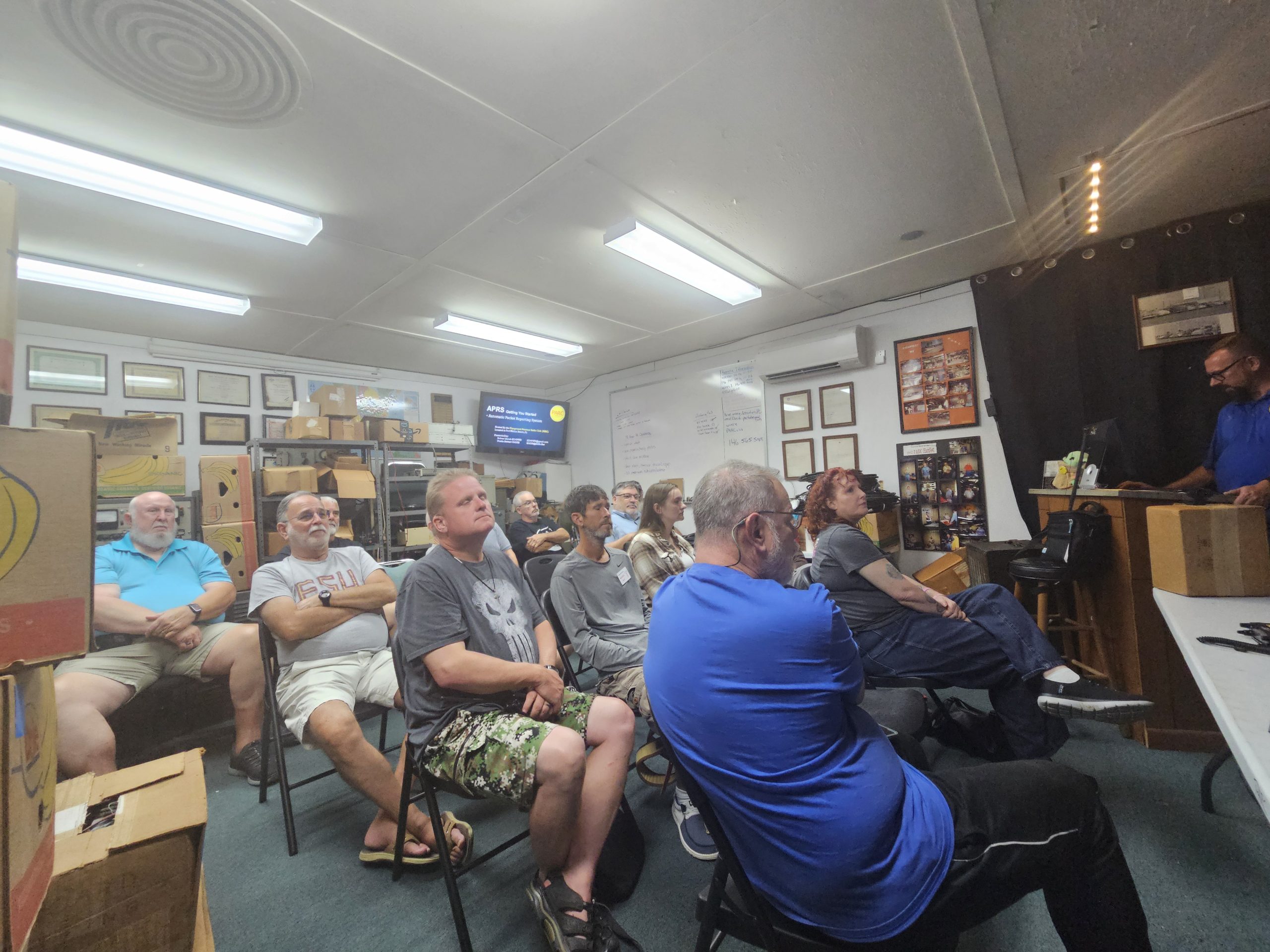
PARC Goes Digital! Great Tech Night at the Playground Amateur Radio Club Technical Night! Mark NC4MR took the reins and taught us a thing or two about digital modes in ham radio. Starting with a great presentation followed up with some time at Station 2 to demonstrate using WSJT-X and GridTracker on FT8.


Thanks, Mark for the great presentation and the work you have put into making PARC a digital powerhouse.


Thanks to everyone who showed up


73, KQ4ATC

Ready to unlock a world of voices from across the globe? 

📻✨

Amateur radio isn’t just a hobby—it’s a passport to connecting with fellow enthusiasts from every corner of the planet, all without needing the internet! Whether you’re chatting with someone across town or bouncing signals off the atmosphere to reach another continent, every conversation is an adventure.

What makes ham radio so incredible? You’re part of a community that values skill-building, emergency preparedness, and the pure joy of making contact. From learning Morse code to experimenting with digital modes, there’s always something new to explore. Plus, when disasters strike and modern communication fails, amateur radio operators become lifelines for their communities.

Getting started is easier than you think! Study for your license, grab a starter radio, and suddenly you’re part of a global network of operators who share your passion. The thrill of making your first contact, hearing that voice crackle through the static, and exchanging call signs—it never gets old.

Whether you’re interested in contesting, satellite communication, or just making new friends worldwide, amateur radio offers endless possibilities. It’s technology, community, and adventure all rolled into one. 🌍⚡

Ready to get on the air? The frequencies are waiting!

#AmateurRadio #HamRadio #RadioHobby


KC5RFU 10 Meter Ranking!

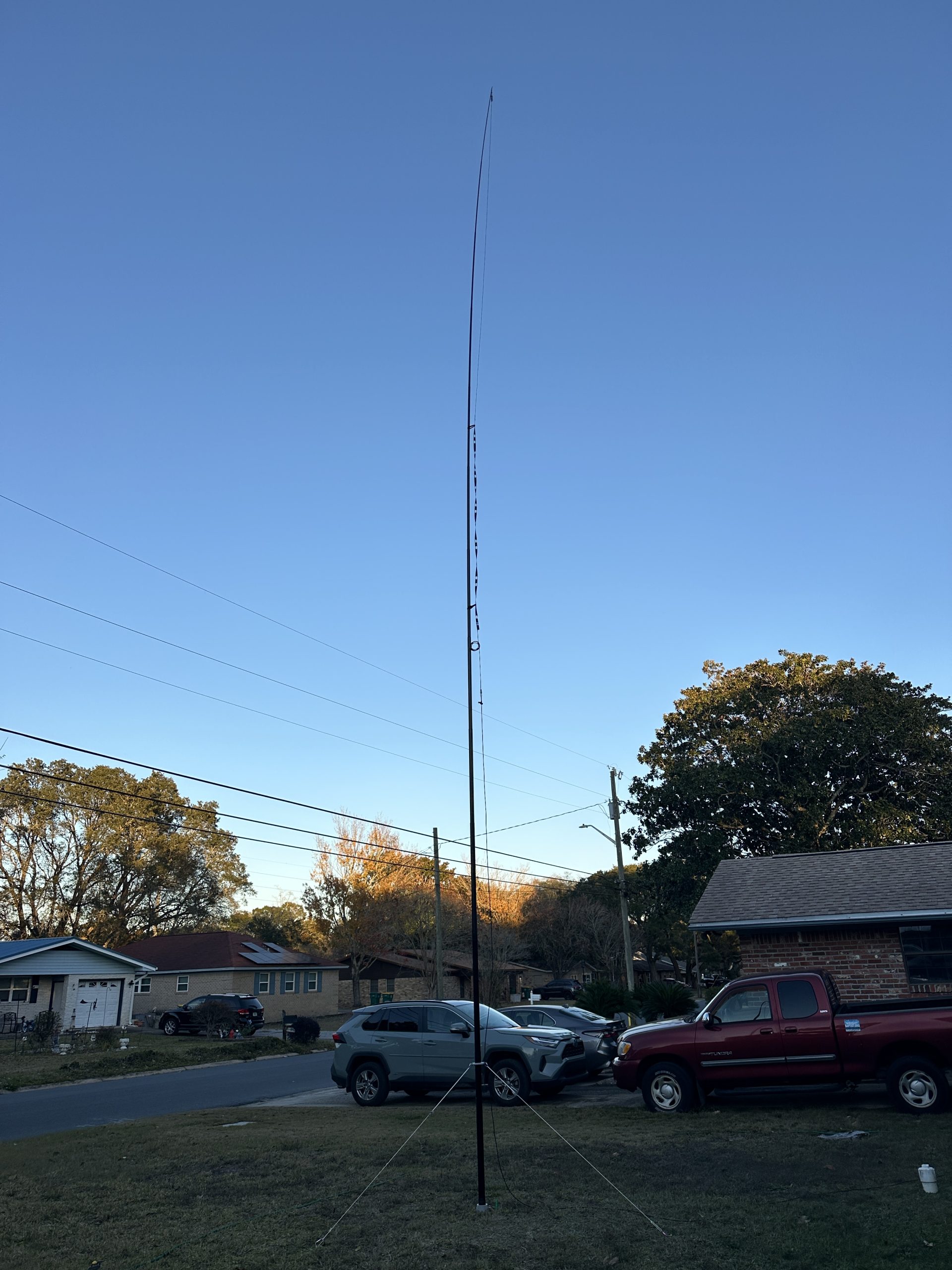
Paul, KC5RFU got a surprise score in the ARRL 10 Meter Contest!  His entry category was Single Operator, Low Power Phone only.  He operated roughly 28 of the 48 hours of the contest.  He was ranked #9 for the US Call Area 4, #5 for the Southeastern Division, and #2 for NFL Northern Florida Section.  Instead of utilizing his crank-up tower and yagi antenna, Paul opted for the limited antennas overlay, meaning he used a homebrew Ladder Line J Pole antenna for 10 Meters mounted on a fiberglass mast in his front yard for the duration of the contest!  The antenna is based on a design by N1LO.  Radio used was a Yaesu FT-710 Field.

Great job Paul!

Did you Gobble?!

Howdy!

We hope you all have had a wonderful Thanks giving and are preparing for Christmas and New Years! Next Year we embark on the ARRL Year of the Club! This will be an exciting time to go forth and promote YOUR organizations, Clubs, activities, and more! Be sure to take part of all of it and recruit people to join out wonderful hobby!

Coming to You on Thursday Dec 4th at the PARC Clubhouse, 17 First St SE Fort Walton Beach Florida we are having a hands on Tech Night with Station 1 introductions and future plans! Be sure to attend and we will see you at 730 pm CDT Thursday Night!


Test Fit and Operation of the PARC Fan Diploe

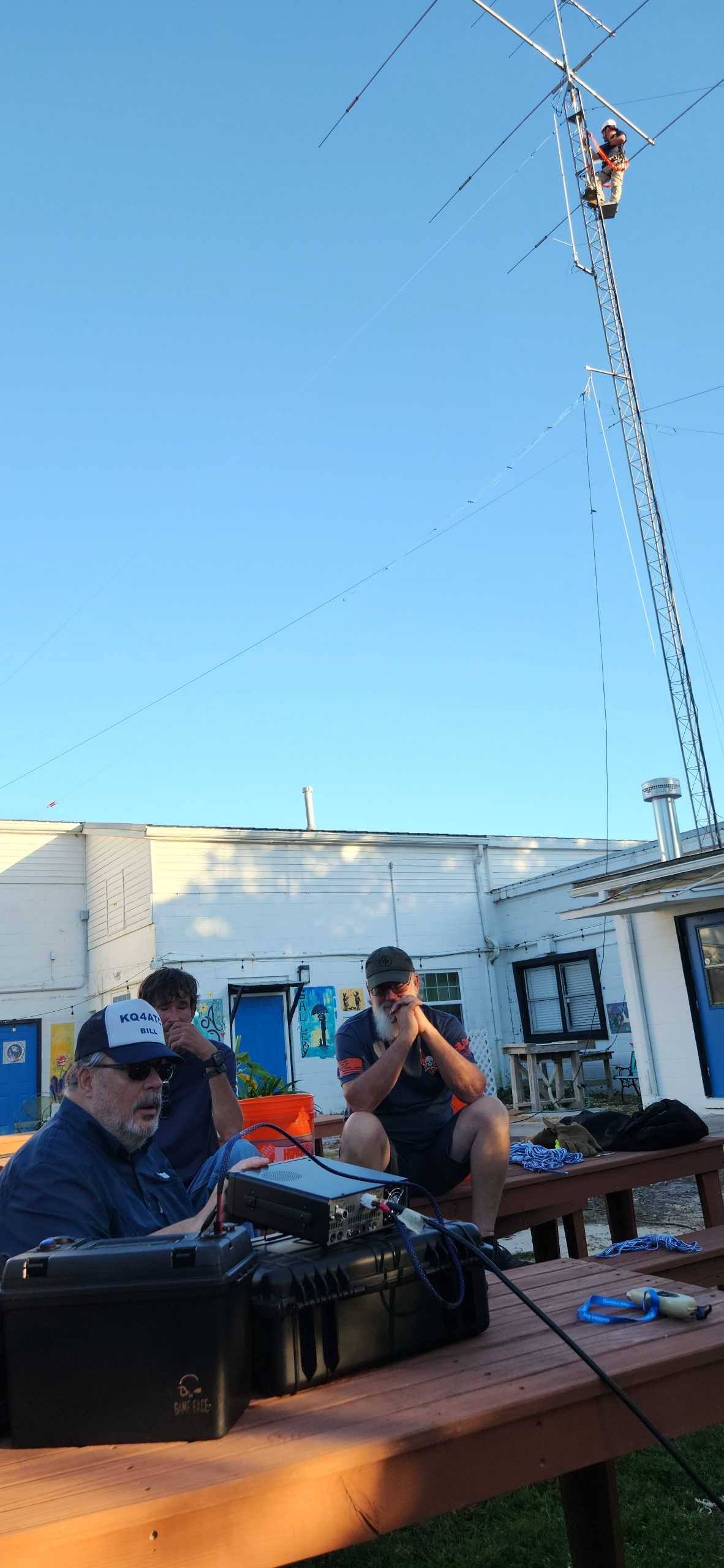
At the Pile-Up, we here at PARC pulled out the Fan Dipole to test and tune it. As well, we are coming up with a permanent deployment plan to install it on our tower! This will aide us in standing up Station 3 for Winter Field Day at the Playground Amateur Radio Clubhouse! More to come on this project!

By the way, we DX’d Paraguay with ease!

Video


Class has Begun!

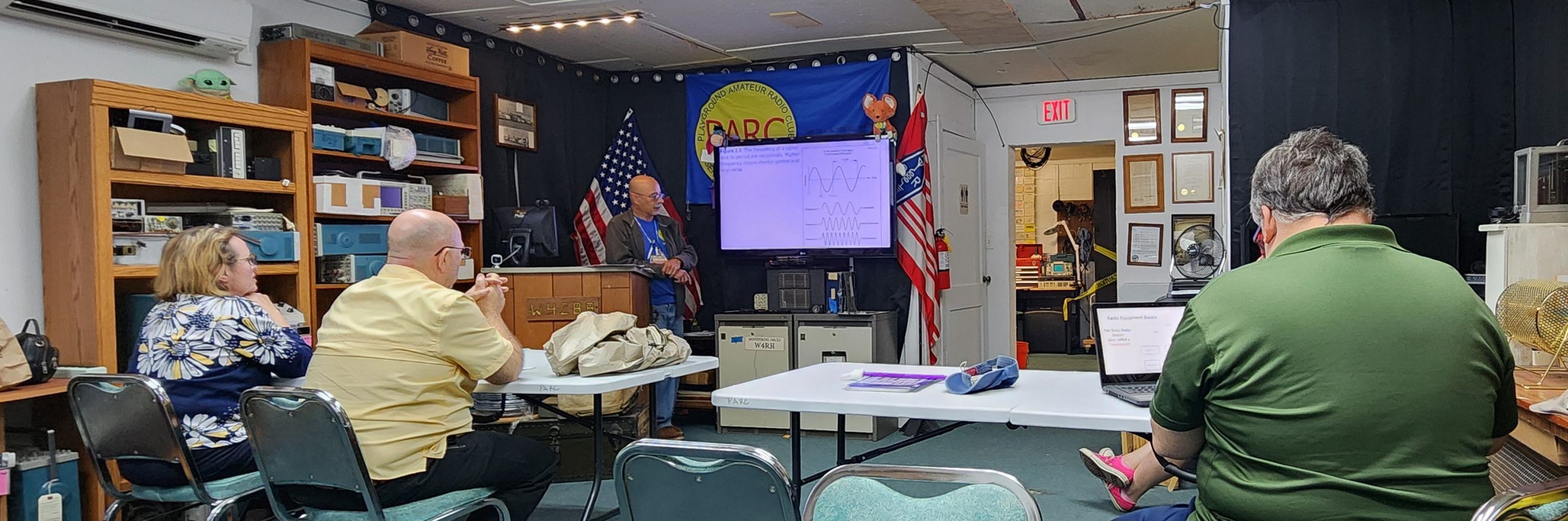
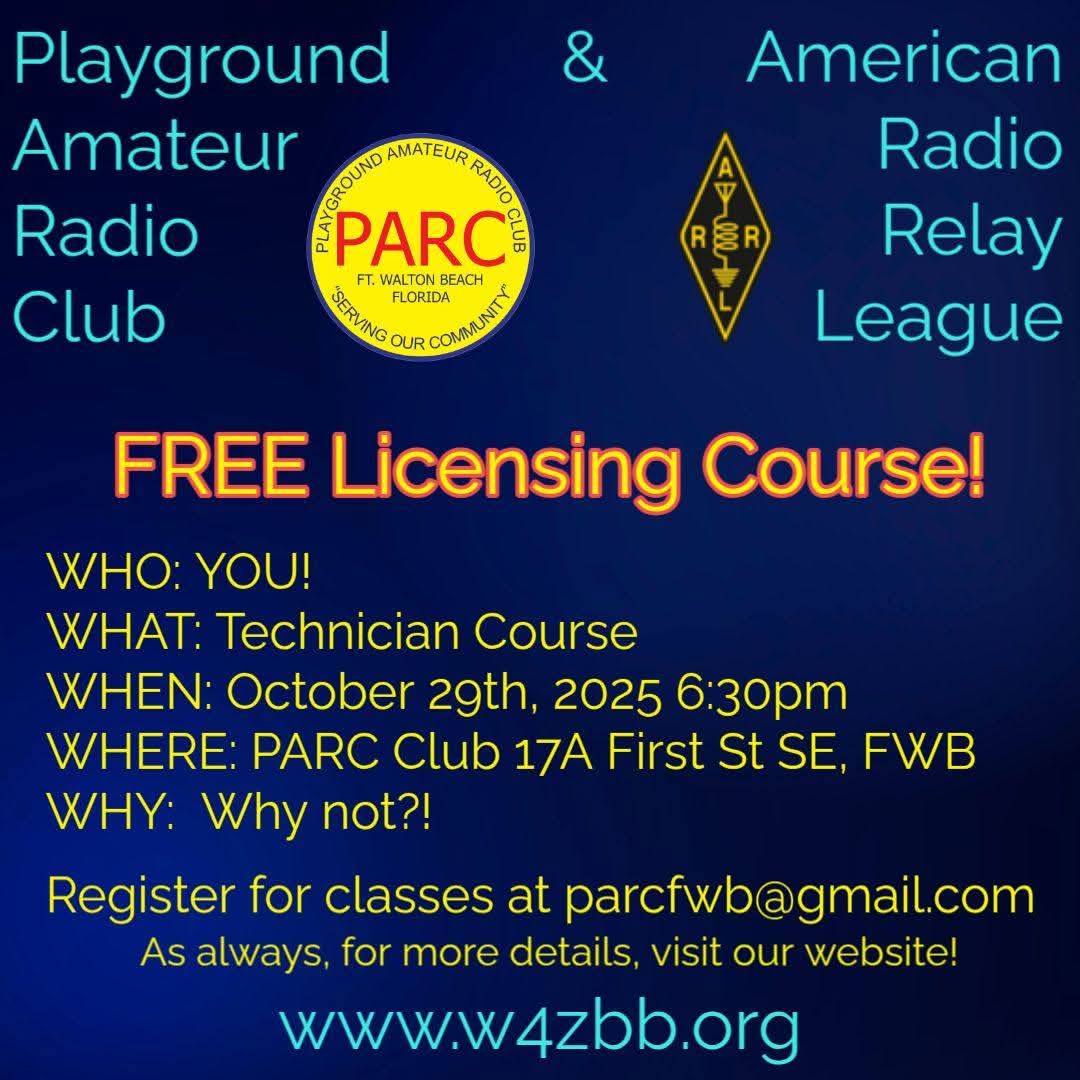
Class has begun at the Playground Amateur Radio Club! This is occurring in person and online! For details go to w4zbb.org.

Page 3 of 7

Powered by WordPress & Theme by Anders Norén